Commercial shoots often leave little room for wasted time. Talent may move through several wardrobe changes, beauty looks, or styling adjustments in a single day, while the production schedule continues moving forward. Without a dedicated preparation space, even simple touch-ups can create delays and unnecessary movement around the set.
Makeup and styling trailers provide a practical solution by bringing a professional preparation environment directly to the production location. However, not every trailer is configured the same way. Choosing the right one means looking beyond appearance and considering how the space will function during a fast-paced commercial shoot.
Start With the Trailer’s Interior Configuration
The layout should be one of the first considerations when evaluating a makeup and styling trailer. A visually impressive interior is not particularly useful if several artists and talent cannot work comfortably at the same time.
Think about how many people will occupy the trailer during peak preparation periods. Multiple makeup artists, hairstylists, wardrobe professionals, and talent may need access to the space simultaneously. A well-planned layout should provide enough room for movement without making everyone feel like they are participating in an unusually complicated game of musical chairs.
Separate work areas can also improve efficiency. When makeup, hair, and wardrobe functions have clearly defined spaces, professionals can work simultaneously instead of waiting for one another to finish.
Evaluate Lighting for Makeup and Styling Accuracy
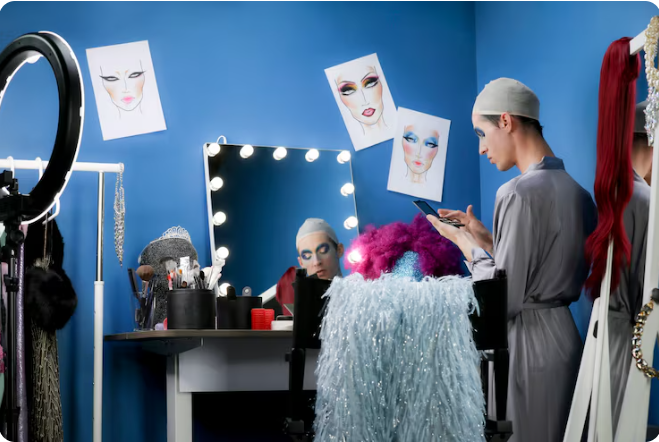
Lighting is critical when a trailer is being used for professional beauty work. Makeup artists need to see skin tone, texture, color, and detail accurately, while hairstylists require sufficient illumination to work precisely.
Natural light can be useful, but it should not be the only consideration. Commercial productions may begin before sunrise, continue into the evening, or take place in locations where exterior conditions change throughout the day. Consistent interior lighting provides greater control and helps artists maintain a reliable standard regardless of what is happening outside.
The placement of mirrors and lighting fixtures matters as well. Good visibility should be available from practical working positions rather than forcing artists to constantly adjust themselves or their equipment.
Consider Power, Climate Control, and Equipment Support
Professional styling requires more than brushes and combs. Hair dryers, curling irons, straighteners, lighting equipment, steamers, and other tools may all require dependable power throughout the day.
When evaluating production trailers, consider whether the available electrical setup can comfortably support the equipment being used. Convenient outlets can also reduce clutter and minimize the need for extension cords running across working areas.
Climate control is equally important. Makeup and hairstyling can become considerably more difficult in an interior that is too hot, cold, or humid. Reliable temperature control helps create a stable environment for both artists and talent, particularly during outdoor commercial shoots where weather conditions may be less than cooperative.
Look Closely at Privacy and Changing Areas
Commercial shoots frequently involve multiple wardrobe changes, which makes privacy essential. Talent should have a secure and comfortable place to change without relying on temporary partitions or improvised spaces.
A suitable styling trailer should provide enough privacy for wardrobe changes while allowing the beauty team to continue working efficiently. This becomes particularly important when several talent are involved in the same production.
Privacy also gives talent a place to step away from the activity of the set. Commercial environments can become crowded quickly, especially during location shoots. A dedicated trailer creates a quieter transition point between preparation and performance.
Think About Storage and Workflow
Storage may not be the first feature that comes to mind when renting a makeup trailer, but it can have a major impact on productivity. Commercial shoots can involve numerous products, tools, accessories, costumes, and personal items.
Adequate cabinets, counters, drawers, and designated storage areas help keep those materials organized. When everything has a logical place, artists can find what they need without searching through crowded cases while the clock continues to tick.
The best interior layouts support workflow rather than simply providing maximum square footage. Counter space should be usable, equipment should remain accessible, and frequently needed items should not be hidden behind other gear.
Match the Trailer to the Scale of the Shoot
A small commercial with one or two talent members may have very different requirements from a campaign involving a larger cast, several styling teams, and extensive wardrobe changes.
Choosing a trailer that is too small can create congestion and slow down preparation. Choosing one that is unnecessarily large may increase costs without providing meaningful benefits. The goal is to match the vehicle to the production’s actual needs.
Consider the number of talent, artists, stylists, and wardrobe professionals who will use the space at the same time. Also consider whether the trailer will remain stationary or move between locations during the shoot. Mobility requirements can influence which configuration is most practical.
Make the Rental Decision With Production Efficiency in Mind
The right makeup and styling trailer should do more than provide a polished interior. It should help the production maintain its schedule by creating an organized, comfortable, and dependable preparation environment.
Before booking, evaluate the layout, lighting, electrical capacity, climate control, privacy, storage, and expected number of users. These details can have a surprisingly large impact once the cameras are rolling.
If you still have questions about selecting the right mobile production solution,Have Questions? Contact Us to discuss your shoot requirements and determine which setup makes the most sense.
Conclusion
A well-equipped makeup and styling trailer can become an important part of a commercial production’s workflow. The right combination of professional lighting, functional work areas, reliable power, climate control, privacy, and storage gives artists the environment they need to work efficiently while keeping talent close to the set.
Rather than choosing a trailer based solely on appearance or size, focus on how it will perform during the busiest moments of the production. A thoughtfully selected mobile styling space can reduce unnecessary movement, improve preparation, and help the entire shoot stay on schedule. Evaluate your production’s specific needs, choose a configuration that supports your team, and make the preparation process as polished as the final commercial.