Residential swimming pools have evolved far beyond basic rectangular basins filled with water. Modern backyard design treats the pool as an integrated architectural feature, combining advanced hydraulic engineering, hydrotherapy, dynamic water movement, and smart technology. Incorporating contemporary additions into a new pool layout enhances visual elegance, expands daily functionality, and minimizes routine operational maintenance. Whether planning a serene private retreat or an expansive venue for family entertainment, evaluating current design concepts allows homeowners to choose enhancements that match their lifestyle. Understanding how specialized water structures, automation systems, thermal elements, and energy-efficient equipment interact provides the foundation for creating an outdoor living area built for long-term comfort and utility.
Architectural Water Features and Hydrodynamic Elements
Integrating structural water features transforms a standard swimming pool into a dynamic visual centerpiece. Water movement creates soothing acoustic ambient sounds that mask ambient neighborhood noise while adding architectural depth to the entire yard layout.
Modern pool designs frequently incorporate distinct hydrodynamic features:
- Sheer Descent Waterfalls: Linear water features built into raised masonry walls that produce a smooth, clear arc of water flowing into the main pool basin.
- Deck Jets and Laminars: Flush-mounted fixtures set into surrounding pavers that project arching streams of water across the deck into the pool. Laminars produce solid, glass-like tubes of water that can be internally illuminated with low-voltage LEDs.
- Bubblers and Squirts: Submerged nozzles placed on shallow entries or tanning ledges that create gentle bubbling surface plumes, offering interactive play zones for young children.
- Infinity and Zero-Edge Horizons: Engineered edges where water flows continuously over a vanishing weir into a hidden catch basin, creating the visual illusion that the pool blends seamlessly into the surrounding landscape or horizon line.
Shallow Entry Zones and Integrated Lounging
How swimmers enter and relax within a pool has shifted significantly toward shallow, multi-purpose water spaces. Incorporating shallow aquatic shelf zones creates comfortable spaces for sunbathing, shallow water play, or casual conversation without requiring full submersion.
Tanning Ledges and Baja Shelves
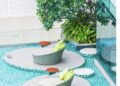
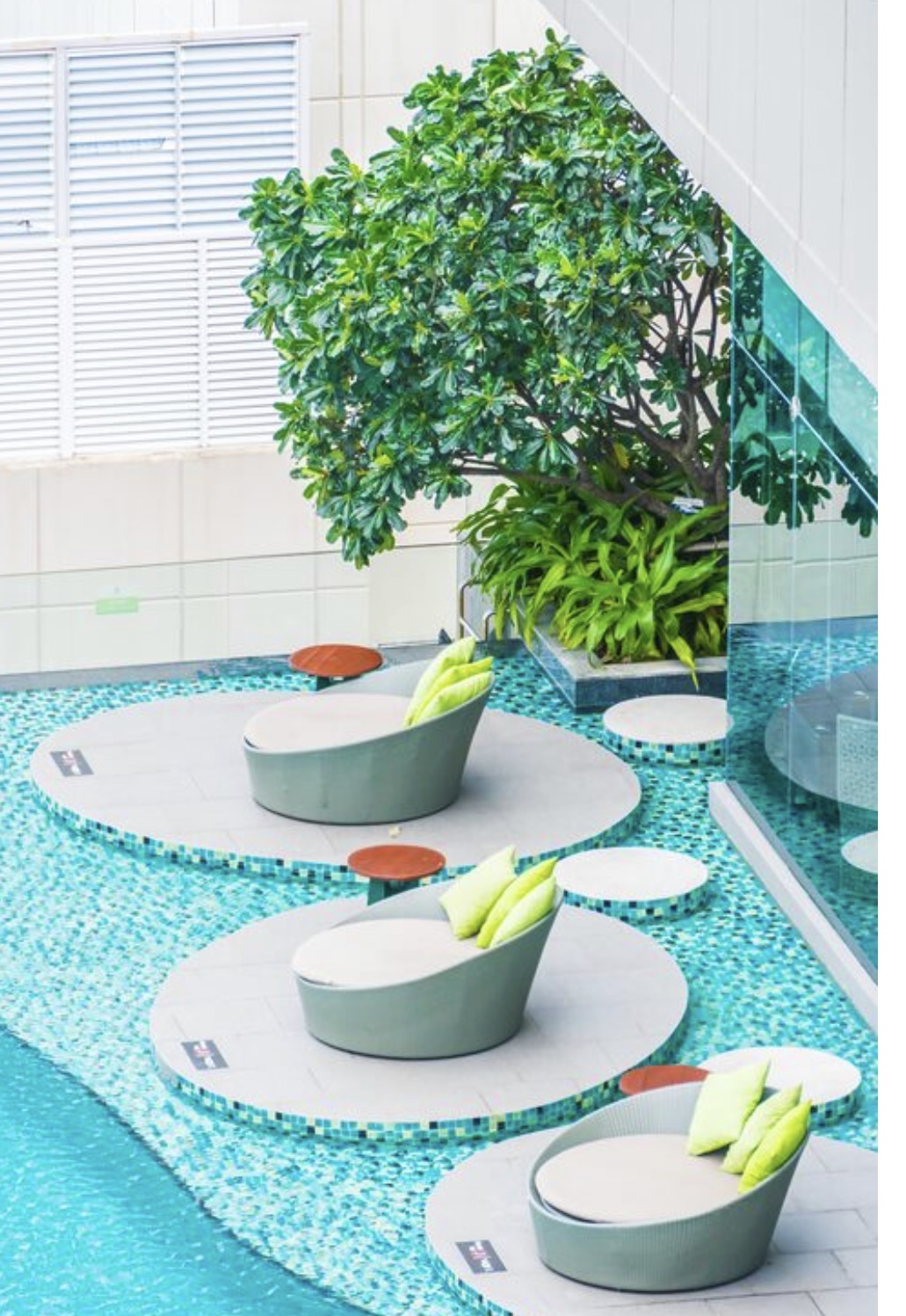
A tanning ledge, often called a baja shelf, is a shallow platform typically submerged in 4 to 9 inches of water. Located near the primary pool entry, these shelves accommodate specialized in-water lounge chairs, side tables, and umbrellas. They allow adults to sunbathe while staying cool and offer a safe, shallow splash area for young children.
Swim-Up Bars and Sunken Seating
Extending functional living space directly into the water basin is a popular trend in custom residential pool planning. Built-in submerged bar stools paired with a raised concrete or granite counter overhang create a resort-style refreshment station. Combining a swim-up bar with an adjacent sunken patio seating area allows swimmers in the water to converse at eye level with guests seated on the dry deck. Homeowners exploring sophisticated structural layouts often incorporatemodern pool features to seamlessly merge in-water loungers, raised hydrotherapy spas, and custom masonry coping into a unified outdoor environment.
Advanced Lighting and Visual Ambiance
Lighting design plays an essential role in extending pool usability into the evening hours while highlighting surrounding hardscape architecture. Modern low-voltage LED technology has completely replaced traditional incandescent pool bulbs, offering lower energy consumption, longer operational lifespans, and far greater color versatility.
Submerged LED fixtures can be programmed to display static hues or synchronized color-changing sequences that alter the mood of the backyard instantly. Micro-LEDs installed along the pool floor or beneath waterline coping stones create subtle starry-night visual effects. Up-lighting integrated into surrounding planter walls, sheer descent waterfalls, and nearby palm trees eliminates dark corners, establishing a balanced visual atmosphere across the entire property.
Smart Pool Automation and Operational Technology
Managing water quality, temperature, and lighting no longer requires manual adjustments at the equipment pad. Smart home integration allows pool owners to control every operational parameter remotely through mobile applications or voice-activated home hubs.
Automation controllers coordinate key systems automatically:
- Sanitation Management: Automated salt-chlorine generators and secondary ultraviolet (UV) or ozone disinfection systems sanitize water continuously, maintaining consistent sanitizer levels while minimizing chemical handling.
- Thermal Regulation: Smart thermostats communicate with high-efficiency variable-speed heat pumps or natural gas heaters to warm the pool or attached spa before homeowners return home.
- Automated Cleaning Systems: Integrated in-floor cleaning heads pop up from the pool floor sequentially to flush debris toward the main drain, reducing reliance on robotic sweepers.
- Scene Setting: Pre-programmed modes allow users to activate specific combinations of water fountains, fire features, lighting hues, and spa jets with a single command.
Comparing Feature Categories for Custom Pools
Selecting features requires balancing visual impact, functional utility, energy demands, and construction complexity across different options.
| Feature Category | Primary Purpose | Installation Considerations | Ongoing Maintenance Impact |
| Baja Shelves & Tanning Ledges | Shallow lounging and child play. | Requires expanded pool footprint and dedicated entry steps. | Minimal; easily cleaned with standard pool sweepers. |
| Sheer Descent Waterfalls | Acoustic ambience and focal point. | Needs dedicated booster pump and raised masonry wall. | Low; requires periodic line flushing to prevent mineral clog. |
| Smart Automation Systems | Centralized control and scheduling. | Requires digital control panel wiring and Wi-Fi connectivity. | Reduces ongoing labor by automating chemical and pump schedules. |
| Color-Changing LED Lighting | Nighttime safety and atmospheric mood. | Low-voltage transformer installation with nicheless wall fittings. | Low; long lifespan compared to legacy incandescent bulbs. |
| In-Floor Cleaning Systems | Automated debris management. | Installed during original concrete shell pour; extensive plumbing grid. | Minimizes manual vacuuming; internal pop-up heads require periodic check. |
Combining Fire and Water Elements
Contrast adds visual interest to outdoor living spaces, making the combination of fire and water features a compelling design choice. Linear gas fire pits, stone fire bowls mounted on raised pool pillars, or open fire tables set adjacent to water edges bring warmth, soft light, and dramatic flair to the pool deck.
Gas-powered fire features utilize natural gas or propane lines trenched beneath the hardscape during initial excavation. Automated electronic igniters allow fire bowls and water features to operate simultaneously via remote control, creating striking displays where flames appear to float directly above flowing waterfalls or pool rims.
Building a Customized Backyard Oasis
Designing a custom residential pool is an opportunity to craft an outdoor environment tailored precisely to personal recreation and relaxation goals. By incorporating architectural water features, shallow lounging zones, smart automation, and energy-efficient lighting, property owners create a space that offers exceptional comfort and visual appeal. Evaluating these innovative options during the initial planning phase ensures that structural engineering, plumbing infrastructure, and material selections work together to deliver a low-maintenance, high-value outdoor retreat.